
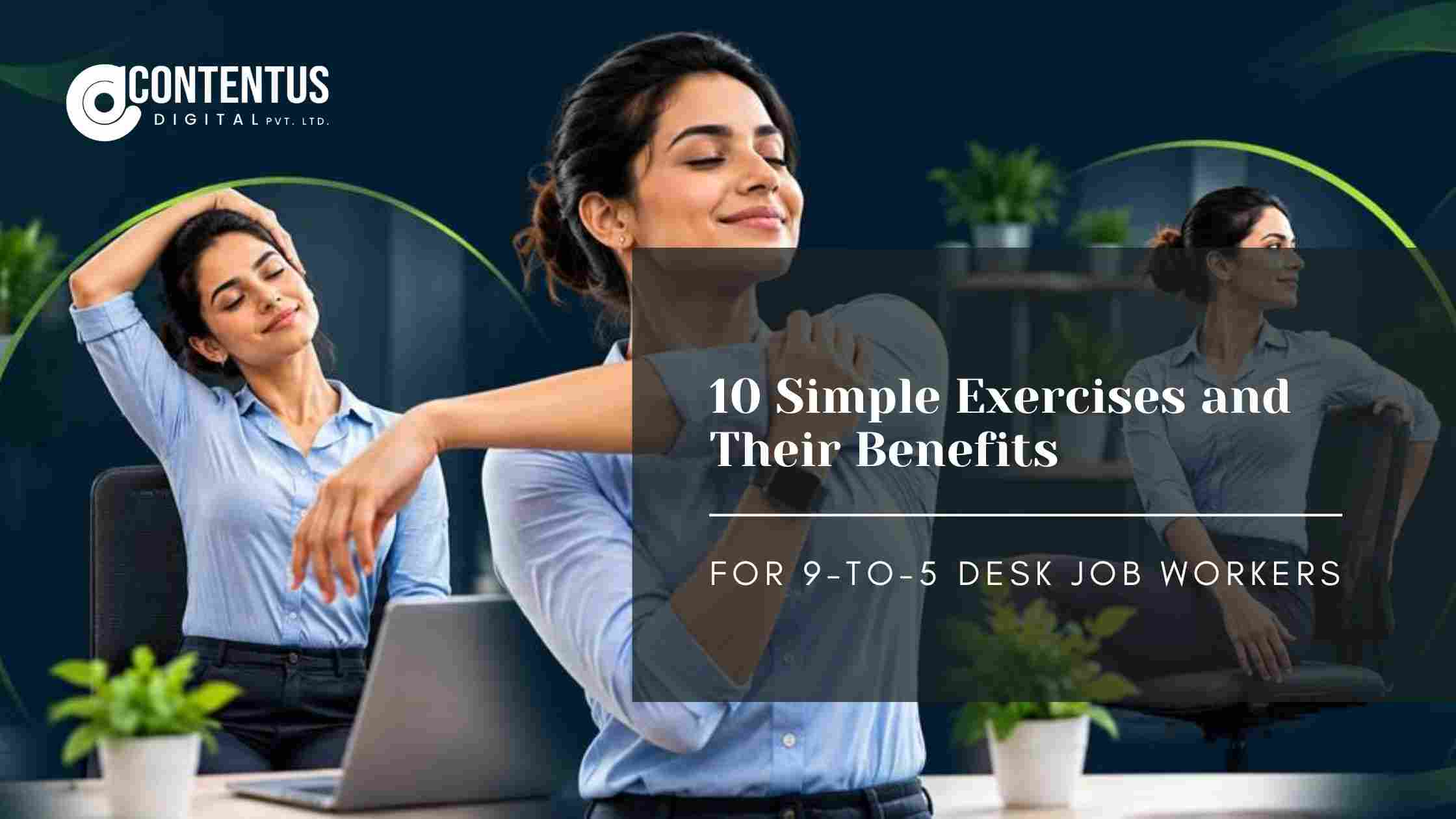
10 Simple Exercises and Their Benefits for 9-to-5 Desk Job Workers
A normal 9-to-5 job consists of sitting down at a desk and completing day-to-day responsibilities. These include attending meetings, responding to emails, and daily tasks. Because of the workload, exercise tends to become the last on the to-do list. Most office workers don’t get enough time for even a mild body movement. They may only get a chance to walk during lunch breaks or a quick access to the lavatory. By the end of the day, one may experience tight shoulders, backaches, tired eyes, or tiredness.
The good news is that being fit does not necessarily mean that one has to sign up for a gym or spend hours at the gym. Some small movements during the course of the day can help ease the discomfort of sitting.
Thus, knowing some of the exercises and their benefits will enable the employees to decide which exercises they will incorporate into their schedules.
Why Should Desk Job Workers Exercise Regularly?
Understanding different types of exercise helps desk workers build a balanced fitness routine. The act of stretching will facilitate flexibility. A simple workout will build up muscles, while taking a walk is a good way to add some physical activity to one’s day.
Generally, exercise has a positive effect on one’s mood, level of energy and focus. Hence it is important to select activities that are easy to do rather than those that can be challenging to maintain.
Regular exercise is important for maintaining overall health. According to the World Health Organization (WHO), adults should aim for 150 minutes of moderate-intensity aerobic activity per week. They should also include muscle-strengthening activities on at least two days a week. Desk exercises can complement these activities and help workers break up long periods of sitting.

1. Neck Stretches
Doing neck stretches could help loosen up your neck and make it more flexible. This simple exercise is very helpful when performed during the corporate breaks, in the meetings or after long hours of work.
How to do it: How you can help: Sit up straight in your chair, with your feet flat on the floor. Now, drop your head down to the right, keeping your right shoulder down. Pause 10, 15 seconds. Turn your head to the center and do the same thing on the left. Slowly turn your head and look over your right shoulder. Hold for a few seconds and repeat on the left. Do 2-3 repetitions on each side, without forcing the motion.
2. Shoulder Rolls
As we sit, type, and use the mouse we are likely to develop tension in the shoulders. The good news is that the shoulder roll is a simple office exercise that doesn’t require any special equipment.
While sitting or standing with a straight back, bring your shoulders up towards your ears. Then, roll them backward before bringing them down. Do this 8-10 times, and then roll your shoulders in the opposite direction.
TThe exercise is a great way to get your shoulders moving and relieve the tension created due to sitting at a desk for a long time. It can also serve as a nice way to interrupt inactivity at your desk. Most importantly, shoulder rolls probably belong to the easiest exercises you can do sitting at your desk, which makes remembering them easy as well as integrating them into your daily routine.
3. Seated Spinal Twist
If you have been sitting for hours at a time, it’s normal for your back to feel tight due to not moving much. Here’s a simple way to enable you to twist your upper body without getting up from your chair:
How to do it? Sit at the edge of your chair with your feet placed firmly on the floor. Place your right hand on your left knee and twist your torso to the left. Be careful not to twist your hips as well. Keep your hips facing forward and hold the position for 10–15 seconds. Return to the centre and repeat on the opposite side. Perform 2–3 repetitions on each side without forcing the twist. Also make sure you think of changing your position from time to time.
4. Overhead Arm Stretch
Being cooped up at a desk all day can do a number on your upper body, leaving you stiff by the end of the day.
First raise both arms up and over your head. As you move your arms up, stretch upwards, but don’t twist your back. As a way to change it up a bit, you can also lean to the left or right as you stretch, just be sure to get back to center after a few seconds. The stretch will loosen up your shoulders and upper back. Also, it’s a great way to stretch after long hours at the computer.
5. Wrist Circles and Finger Stretches
People who work in an office are known to perform the same action over and over again with their wrists and hands when typing, writing, or using a mouse. Giving these parts of the body a little break will surely help everyone feel better.
How to take a break? Position your hands straight in front of you and rotate your wrists slowly in both directions. Perform about 8–10 rotations in each way. After that, stretch out your fingers, hold for a while and relax your hands. Do this a few times.
These exercises help move your wrists gently and also take them away from the repetitive action of the hands and fingers.
6. Seated Knee Raises
If you spend a long time sitting, your legs hardly get any serious physical activity except for moving around your workspace. Seated knee raises are a simple form of exercises that will stimulate your legs without having to leave your office chair.
So, you can simply sit straight and keep your feet flat on the ground. Now, all you have to do is to lift your right knee for a moment and drop it back. Now, repeat the same action with your left knee for 10–12 times.
The exercise will activate the muscles in your hip and thigh region while it makes you move when sitting for a long time. Besides that, tThe exercise can be performed by those people who have limited space since it doesn’t attract any public attention.
7. Seated Calf Raises
Calf raises are the easiest thing you can do from a sitting position. The exercise engages your calf muscles and moves your ankle joints.. This means that you can do them at any time, even if you have only a minute or two before someone arrives to discuss business with you. It’s also advisable to perform some standing and walking alongside the sitting exercises rather than just relying on chair workouts.
8. Chair Squats
Chair squats are a great way to stay active in the workplace. In order to perform this specific task, position a sturdy chair in front of you facing away with feet planted on the floor about shoulder width. Now lower your body as though you are sitting back onto the chair. Then stand back up. Repeat desired amount of times (recommended: 5-10 repetitions).
Chair squats work on the large muscles in your legs and glutes, as well as promote break from sitting down for too long.
9. Wall Push-Ups
Stand facing a wall, about an arm’s length away. Place both palms flat against the wall at shoulder height and shoulder width apart. Keep your feet slightly apart and your body straight. After that, slowly bend your elbows and lean your chest towards the wall. Hold briefly; then push through your palms to return to the starting position. Repeat 8–10 times while maintaining a controlled movement.
10. Brisk Walking
If we look through different types of exercises and their benefits, Brisk Walking is the easiest physical activity. It triggers muscle movement all over the body without doing much. It also helps increase heart rate and breathing, regulate blood flow and keeps you energetic at your workspace.
Start by standing upright, keeping your shoulders relaxed and eyes forward. Walk faster than your usual pace while maintaining a steady rhythm. Swing your arms naturally and take comfortable, purposeful steps. Continue for 10–15 minutes, keeping your breathing slightly faster while still being able to talk.
But you might wonder why it’s called ‘Brisk walking’ then! It’s called ‘Brisk’ because it’s quicker, more energetic, lively, and full of purpose than your normal walking.
How to Include These Exercises Into Everyday Schedule
One should know about different kinds of exercises and their benefits as they provide mental and physical stability. One does not necessarily have to do all ten exercises at once. It would be a good idea to spread them out through the week and do those that complement one’s work.
It‘s also necessary to consider mobility and flexibility. Whereas the former is about the range of motion of the joints, the latter is about how far one can stretch one’s muscles. The Yoga Institute recommends working on both to improve one’s body’s capability.
A Simple Daily Exercise Routine for Desk Job Workers
Finding time to exercise during a busy workday can feel difficult. However, short movement breaks can help desk workers stay active. Here is a simple routine they can follow:
You do not need to follow this schedule strictly. Adjust the timing according to your workload and comfort. Start with simple movements and gradually build a consistent routine. Remember to change your sitting position and take regular movement breaks throughout the day.
Conclusion
A desk job worker doesn’t mean they have to lead a boring lifestyle. So, try exercising while working, and taking frequent breaks to lower health risks. Being educated on exercises and their benefits can play a role in making the right decisions pertaining to one’s personal fitness regimen. A healthy lifestyle starts with regular movement and informed exercise choices.
But you don’t need to do all 10 exercises at one time. Begin with easy exercises. Then go to harder ones. As you get more comfortable, add more exercises. Set reminders on your phone to get up and move around, stretch out your muscles and get out from behind your desk.
And remember, it’s all about small, consistent steps to keep active. Get movement in your day, not just activity after work.
Frequently Asked Questions
1. What are the benefits of exercising during office hours?
Exercising during office hours helps reduce stiffness, improve mobility, and break up long periods of sitting. It can also support energy levels and overall well-being.
2. Which exercises can you do at your desk?
You can try neck stretches, shoulder rolls, seated spinal twists, wrist circles, seated knee raises, and seated calf raises without leaving your desk.
3. How often should desk workers take movement breaks?
Try to break up long periods of sitting regularly by standing, stretching, or walking briefly. Set reminders to move throughout your workday.
4. Can desk exercises replace a daily workout?
No, desk exercises complement but do not replace a regular fitness routine. Combine them with aerobic activities and muscle-strengthening exercises for better overall health.
5. Which exercises help reduce stiffness after sitting for long periods?
Neck stretches, shoulder rolls, overhead arm stretches, and gentle seated spinal twists can help ease stiffness. Take regular movement breaks to avoid sitting for too long.